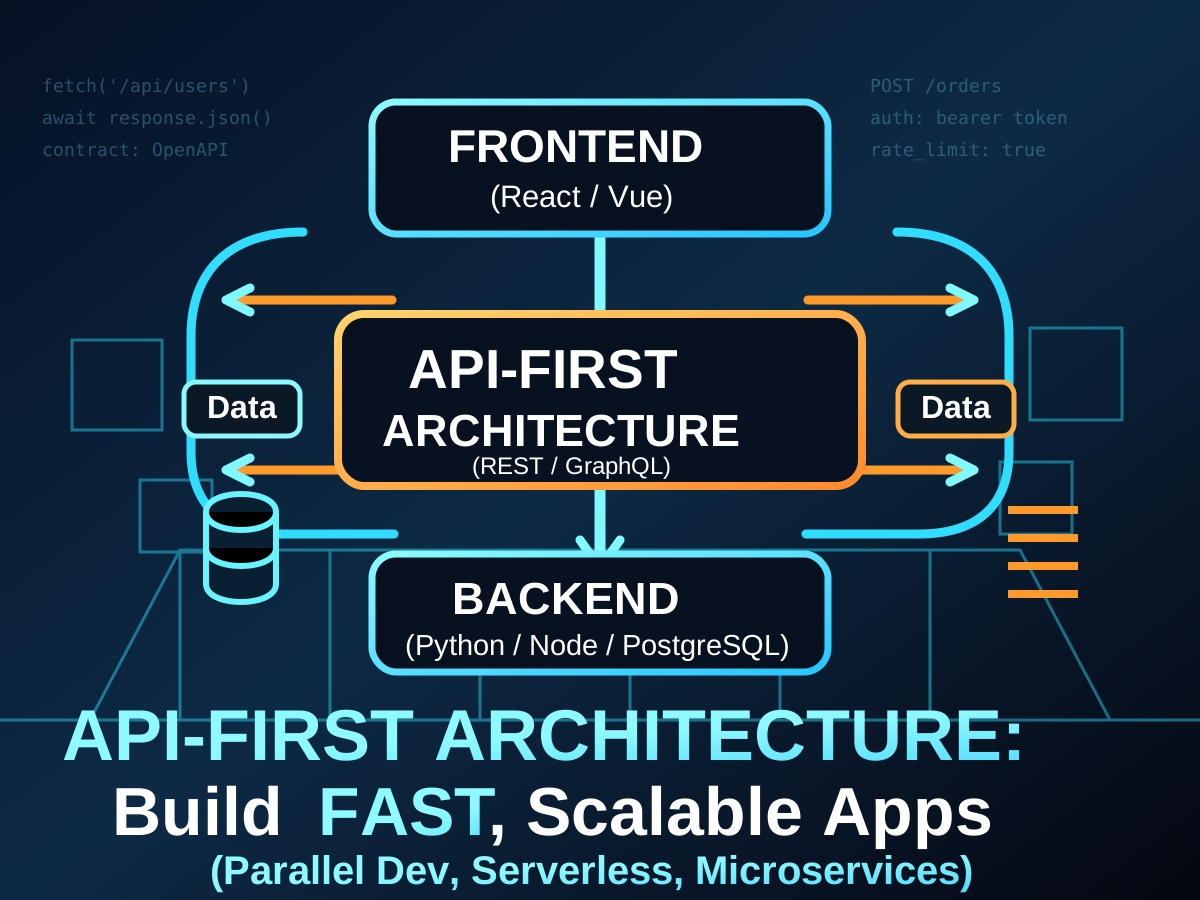
Many older web apps were built as one large unit: the page templates, backend logic, sessions, database queries, and admin features all lived tightly together. That can work for a small project, but it becomes painful when the same product needs a website, mobile app, partner dashboard, automation workflow, or AI service.
An API-first approach changes the starting point. Instead of designing the screen first and adding endpoints later, the team first defines the data contract: routes, request formats, response formats, error rules, authentication, and versioning. The API becomes a product that every client can trust.
What API-first means in practice
API-first does not mean the user interface is less important. It means the frontend and backend agree on a stable contract before both sides move quickly. Tools such as OpenAPI and Swagger make that contract readable, testable, and shareable.
- Frontend developers can build screens with mock responses.
- Backend developers can implement business logic without waiting for final UI polish.
- Mobile apps and third-party tools can reuse the same endpoints.
- Testing becomes clearer because every endpoint has expected inputs and outputs.
Why teams choose API-first architecture
| Benefit | What it changes |
|---|---|
| Frontend freedom | React, Vue, mobile apps, or plain HTML can consume the same JSON data. |
| Parallel development | Teams build faster because the contract removes guessing. |
| Integration readiness | Partners, automation tools, and internal dashboards can connect safely. |
| Cleaner scaling | Heavy features can move into services or serverless functions when needed. |
Choosing a practical stack
The right stack depends on your app size, team skill, and expected traffic. Start simple, then scale the pieces that actually need more power.
| Layer | Light setup | Scaling option |
|---|---|---|
| Backend framework | Flask or FastAPI | Django, Node.js, or a service-based stack |
| Database | SQLite for small tools | PostgreSQL, MongoDB, or managed databases |
| Protocol | REST | GraphQL or gRPC for specialized needs |
| Documentation | OpenAPI file | Generated docs, SDKs, and contract tests |
Security rules for public endpoints
An API-first app exposes data through predictable routes, so security must be designed from the start. Add these controls before traffic grows.
- CORS allowlists: Permit only the frontend domains that should call the API from browsers.
- Token-based authentication: Use JWT or OAuth2 style flows for cross-platform access.
- Rate limiting: Protect login, search, upload, and public routes from automated abuse.
- Input validation: Reject unexpected fields, unsafe file types, and oversized payloads.
- Logging: Track failed logins, unusual spikes, and repeated blocked requests.
When API-first is too much
A tiny static website or one-week prototype may not need a fully documented contract. But as soon as you expect multiple clients, integrations, or long-term maintenance, API-first planning usually saves time.
API-first development is not about adding complexity. It is about making the contract clear so every part of the product can grow with less confusion.